



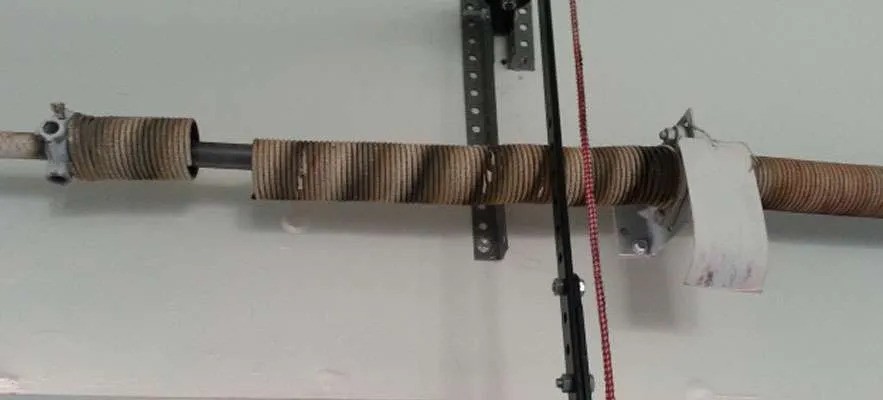
How harmless can a little surface rust on a garage door spring appear? Well, because just about all the metallic pieces rusts as time passes.
However, garage door springs aren’t exactly normal hardware. They have a lot of tension and are responsible for raising the door, as well as balancing it. Rust can, therefore, be much more than just aesthetic, depending on how bad it is and the condition of the spring.
Why Garage Door Springs Rust?
Garage doors are vulnerable to fluctuating temperatures and moisture. Corrosion can also be triggered by humidity, condensation, and poor ventilation.
Most torsion springs are located above the garage door, where moisture and dust can accumulate over time. Exposure to moisture will also cause rust on extension springs.
This is easy to see too; light surface rust can just affect the way the spring looks. Corrosion that goes deeper into the metal is more dangerous, because it can make the metal weaker.
When is Rust Mostly Cosmetic?
Spots of light surface rust do not guarantee a spring is about to break.
If the spring is strong, working, and does not have any signs of heavy corrosion, then a technician may decide to leave it in place for now.
But rust should be still watched. A spring which looks perfect now may rust on with the continual contact of moisture with steel.
You should not scrape, sand, or coat a tensioned spring. These elements may be very hazardous to deal with.
When is Rust a Failure Hazard?
Deep corrosion deserves attention. Look for signs such as:
- Flaking or heavily damaged metal
- This spring surface unveils deep pits
- Visible cracks
- Deformed coils
- Uneven door movement
- Possible stretched or collapsed spring
A thorough inspection is the safest route if the spring is excessively corroded or exhibiting other types of wear.
If a spring is in good shape, you may have some time, but when it gets weak, it can fail abruptly. The component carries a residual tension, so if you try to remove or repair it without adequate training, serious injury could result.
Does Rust Mean You are Going to Need a New Spring?
Not necessarily. The state of the full spring is important.
A technician will evaluate the state of deterioration and wear, spring strength, door adjustment, and many other elements before suggesting an actual repair job. If this spring is worn out badly, maybe garage door spring replacement will be the safest solution.
If a system has matched springs, then it might not always be proper to replace just one. The technician must evaluate setup and manufacturer requirements.
And What About the Garage Door Opener?
Rust on the spring of course does not indicate that it is time to replace the opener. These two parts by themselves have different jobs to do.
An opener gets the door moving, but a spring system provides counterbalance to assist the weight of the door. If a spring issue causes the door to be too heavy, this can result in added strain on the opener.
Sometimes even a garage door opener replacement is required on its own when the whole unit of opener has been failed.
Know When it is Time to Call a Technician
In fact, surface rust is not always an emergency. Deep rust, cracks, or abnormal door movement are grave.
If your spring has gone unreliable anymore, you can end up as receiving garage door spring replacement to bring back a perfect balance and safe operation.
In some cases, garage door opener replacement can be considered on its own if the opener also malfunctioned or simply reached its service life.
But the key thing is simple: do not assess a rusty spring on looks alone. Get it looked at before a little maintenance issue escalates into a failure all of a sudden.
